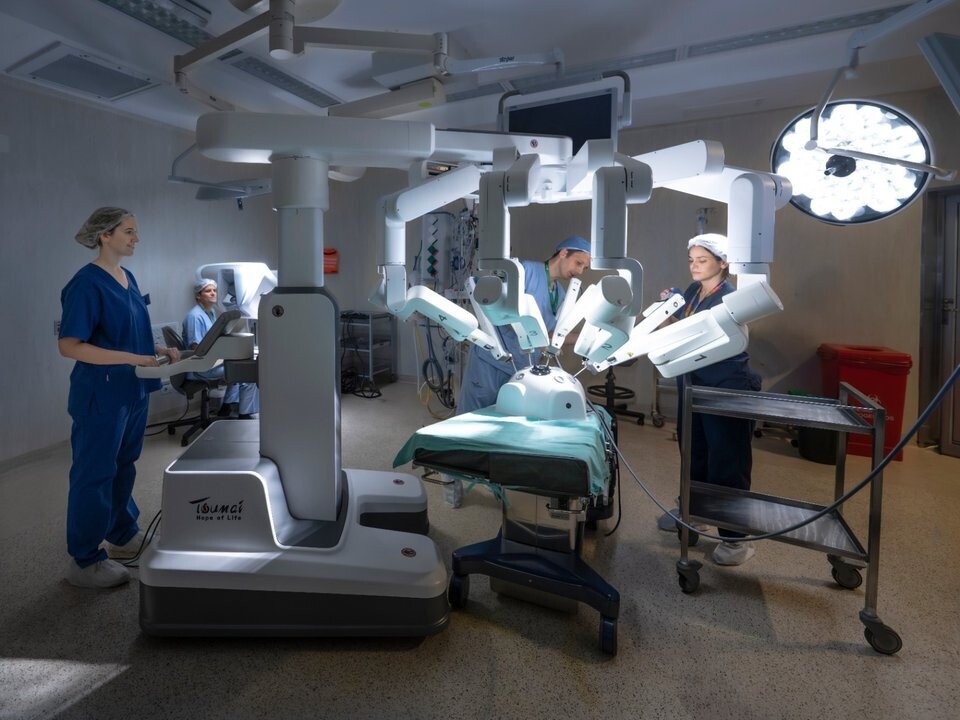
Buenos Aires became the epicenter of medical innovation with the arrival of the Iberoamerican Congress of Robotic Surgery, the first event in Latin America to combine telementoring, 5G connectivity, state-of-the-art platforms, and hands-on training spaces for professionals of all surgical specialties.
Organized by the Urology Service of the Italian Hospital of Buenos Aires and with the academic sponsorship of its university, the congress featured the participation of leading international and national experts. Over two days, the medical community was able to witness surgeries in real time, share experiences, and explore the innovations that are transforming the future of medicine.
As Dr. Pablo Martínez, head of the Urology Service at the Italian Hospital of Buenos Aires and the congress's medical director, noted: "We also work with the concept of telementoring, which implies being able to help remotely from other robotic platforms, wherever they may be. New platforms are enabling more and more institutions and doctors to access technologies that are already installed in other parts of the world. This translates to safer surgeries, less bleeding, and a much faster recovery, with discharges in just 24 hours in most cases."
"In urological cancers such as prostate, kidney, or bladder, robotic surgery offers more precise interventions, with better functional outcomes and a better quality of life for patients," he added.
In this vein, Dr. Alberto Jurado, head of the Urology Service at the aforementioned health center and co-director of the Congress, emphasized: "It is a true pleasure to have first-level guests, both national and international. That is why this event has special importance: it is marking the beginning of a new era."
To conclude, Dr. Martínez stated: "We are living in a moment of openness to robotic surgery, with the incorporation of surgical robotic systems in several health centers in the region. We have the same equipment as the world's leading centers, and that implies a great responsibility: it is not enough to buy the robot, one must sustain continuous training to achieve better results."
Dr. Wenceslao Villamil, head of the Robotic Urology Surgery Section at the aforementioned hospital and also director of the congress, highlighted: "In robotic surgery, we are on par with the most developed countries. The main purpose of our training is our patients, and continuous medical education is the best way to honor our commitment."
According to the Argentine News Agency, among the most anticipated demonstrations are complex procedures such as partial nephrectomy and intracorporeal neobladder reconstruction, as well as a radical prostatectomy.